

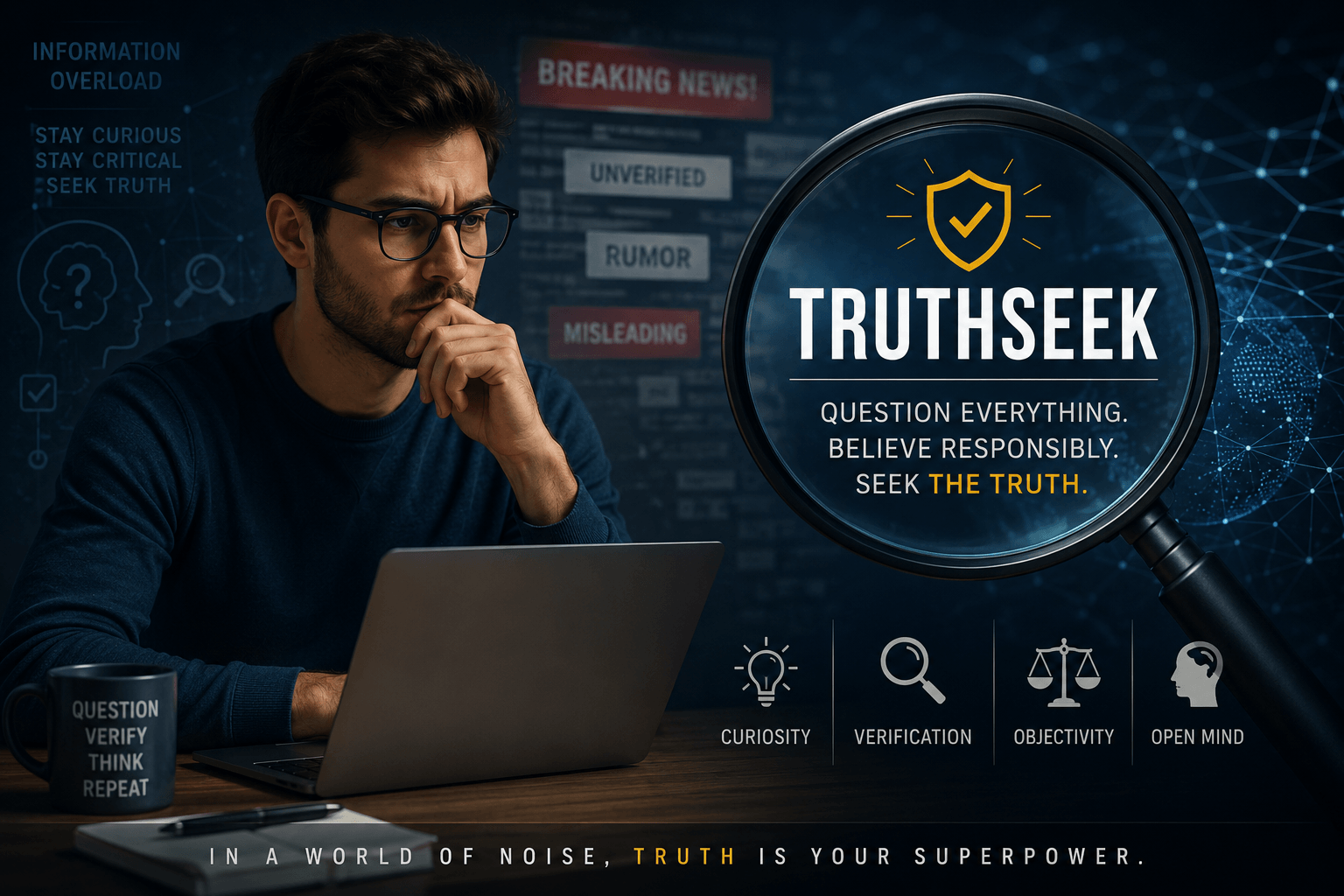
In a world overflowing with information, the idea behind TruthSeek has become more important than ever. People today are surrounded by news, opinions, social media posts, and endless content claiming to be factual. Sorting out what is real from what is misleading has turned into a daily challenge. This is exactly where the concept of TruthSeek comes into the picture, representing the mindset, tools, and approach used to search for accurate, verified, and honest information.
This article explores what TruthSeek means, why it matters, how it applies to everyday life, and how anyone can build a stronger habit of seeking truth in a noisy digital environment.
What Does TruthSeek Actually Mean
At its core, TruthSeek refers to the practice of actively looking for accurate and verified information instead of accepting claims at face value. It is not just a word or a brand name; it represents a mindset. Someone who follows a TruthSeek approach questions sources, checks facts, and avoids jumping to conclusions based on incomplete or biased information.
This concept has grown alongside the rise of digital media. As more content gets created every second, the responsibility of identifying what is true has shifted more toward the individual. TruthSeek captures that responsibility in a simple, memorable way.
Why Truth-Seeking Has Become So Important
A few decades ago, most people got their news from a small number of trusted sources like newspapers or television channels. Today, information comes from countless directions, including social media, blogs, forums, and AI-generated content. Not all of it is accurate, and some of it is intentionally misleading.
This is why the idea of TruthSeek has gained attention. It reflects a growing awareness that people need to take an active role in verifying information rather than passively consuming it. Misinformation can influence opinions, decisions, and even public behavior, so learning how to seek truth has real consequences.
The Core Principles Behind TruthSeek
The philosophy behind TruthSeek is built on a few simple but powerful principles. First is curiosity, the willingness to ask questions instead of accepting the first answer available. Second is skepticism, which means not blindly trusting a source just because it appears confident or popular.
Another key principle is verification. This means checking multiple sources, understanding context, and looking at evidence before forming a conclusion. Finally, there is humility, the acceptance that our first understanding of something might be incomplete or wrong, and that new evidence should shape our views.
Together, these principles form the backbone of what TruthSeek stands for. It is less about being right all the time and more about being willing to search honestly for what is accurate.
How TruthSeek Applies to Everyday Life
Truth-seeking is not limited to journalists, researchers, or fact-checkers. It applies to ordinary situations that most people face regularly. For example, when reading a health article online, a person practicing TruthSeek habits would check whether the claims are supported by credible medical understanding rather than assuming they are true because they sound convincing.
The same applies to financial decisions, product reviews, political discussions, and even personal relationships. Anytime someone chooses to look deeper instead of accepting surface-level claims, they are practicing the essence of TruthSeek.
This habit becomes especially useful during major events, such as elections, health emergencies, or economic changes, when misinformation tends to spread quickly and emotions run high.
The Role of Technology in Truth-Seeking
Technology plays a double role in this space. On one hand, it has made it easier to spread false information quickly. On the other hand, it has also created powerful tools that support the goals of TruthSeek, such as fact-checking websites, reverse image search tools, and platforms designed to trace the origin of a claim.
Artificial intelligence has added another layer to this conversation. While AI can be used to generate convincing but false content, it can also be used to detect patterns of misinformation, summarize verified data, and help users cross-check facts faster than ever before.
This is why many platforms and tools today are built around the idea of TruthSeek, aiming to give users a structured way to separate credible information from noise.
Common Challenges People Face While Seeking Truth
Even with good intentions, truth-seeking is not always easy. One major challenge is confirmation bias, where people naturally lean toward information that supports what they already believe. This can quietly work against the goals of TruthSeek, even when someone thinks they are being objective.
Another challenge is information overload. With so much content available, it can be exhausting to verify everything, leading many people to simply trust whatever appears first or spreads the fastest.
Emotional reactions also play a role. Content that triggers strong emotions, such as anger or fear, tends to spread faster, regardless of whether it is accurate. Recognizing these patterns is an important part of practicing TruthSeek effectively.
How to Build Better Truth-Seeking Habits
Developing strong truth-seeking habits does not require special training, just consistent effort. A good starting point is to pause before sharing or believing something, especially if it triggers a strong emotional reaction. This small pause encourages critical thinking instead of quick reactions.
It also helps to check more than one source before accepting a claim as true. If multiple credible and independent sources report the same information, it is far more likely to be accurate. Understanding the difference between opinion and fact is another valuable skill, since many people blend the two without realizing it.
Over time, these small habits build a stronger overall approach to information, which is essentially what TruthSeek encourages people to practice daily.
TruthSeek in Education and Critical Thinking
Educational systems around the world are placing more emphasis on critical thinking skills, and the principles behind TruthSeek align closely with this goal. Teaching students how to evaluate sources, question assumptions, and support claims with evidence prepares them for a world filled with competing narratives.
This is particularly relevant in subjects like media literacy, where students learn to identify bias, understand context, and recognize manipulation techniques. The earlier these skills are introduced, the more naturally people carry a truth-seeking mindset into adulthood.
The Connection Between TruthSeek and Mental Clarity
Interestingly, truth-seeking is not only about facts and data. It also contributes to mental clarity and emotional well-being. Constant exposure to conflicting information, especially when much of it is misleading, can create confusion, anxiety, and mistrust.
By adopting a TruthSeek approach, individuals can reduce this mental clutter. Instead of reacting to every piece of information that appears online, they develop the ability to filter, question, and calmly evaluate what deserves attention. This creates a more grounded and less reactive way of engaging with the world.
The Future of Truth-Seeking in a Digital Age
As technology continues to evolve, the importance of truth-seeking will likely grow rather than shrink. With the rise of synthetic media, deepfakes, and increasingly realistic AI-generated content, distinguishing fact from fiction will require even more awareness and skill.
The future will likely see more structured approaches to truth-seeking, blending human judgment with technological tools. Whatever form it takes, the underlying idea behind TruthSeek, staying curious, questioning claims, and verifying before believing, will remain a valuable skill for navigating an increasingly complex information landscape.
TruthSeek and the Power of Community-Driven Verification
Truth-seeking does not always have to be a solo effort. In many cases, communities and online groups play a valuable role in verifying information collectively. When individuals share sources, cross-check claims, and discuss evidence together, the overall accuracy of shared information improves. This collaborative side of TruthSeek shows that seeking truth is not just about personal skepticism, but also about creating a culture where questioning and verifying become a shared responsibility rather than an individual burden.
Final Thoughts
TruthSeek represents more than a single idea or tool. It reflects a broader shift in how people are learning to interact with information in a digital-first world. As misinformation becomes easier to create and harder to detect, the ability to seek truth thoughtfully becomes a valuable life skill rather than an optional habit.
By practicing curiosity, checking multiple sources, and staying aware of emotional triggers, anyone can strengthen their own approach to truth-seeking. In many ways, TruthSeek is not just about finding the right answer, but about building a healthier, more informed relationship with the information we consume every day.
Frequently Asked Questions
What is the main idea behind TruthSeek?
It represents the practice of actively searching for verified and accurate information instead of accepting claims without question.
Is TruthSeek only relevant to journalists or researchers?
No, truth-seeking applies to everyday situations like reading news, checking health information, or evaluating product claims.
How does misinformation spread so quickly online?
Emotional or surprising content tends to spread faster because it grabs attention, regardless of whether it is accurate.
Can technology help with truth-seeking?
Yes, tools like fact-checking platforms and verification resources support the goals of truth-seeking, although human judgment is still essential.
What is confirmation bias and how does it affect truth-seeking?
Confirmation bias is the tendency to favor information that matches existing beliefs, which can quietly undermine objective truth-seeking.
How can someone start building truth-seeking habits?
Simple steps like pausing before sharing information and checking multiple sources can significantly improve accuracy over time.
Why is truth-seeking considered important for mental well-being?
Filtering and verifying information reduces confusion and anxiety, leading to a calmer and more grounded way of engaging with the world.
